
Coal: A Shift
in Perception
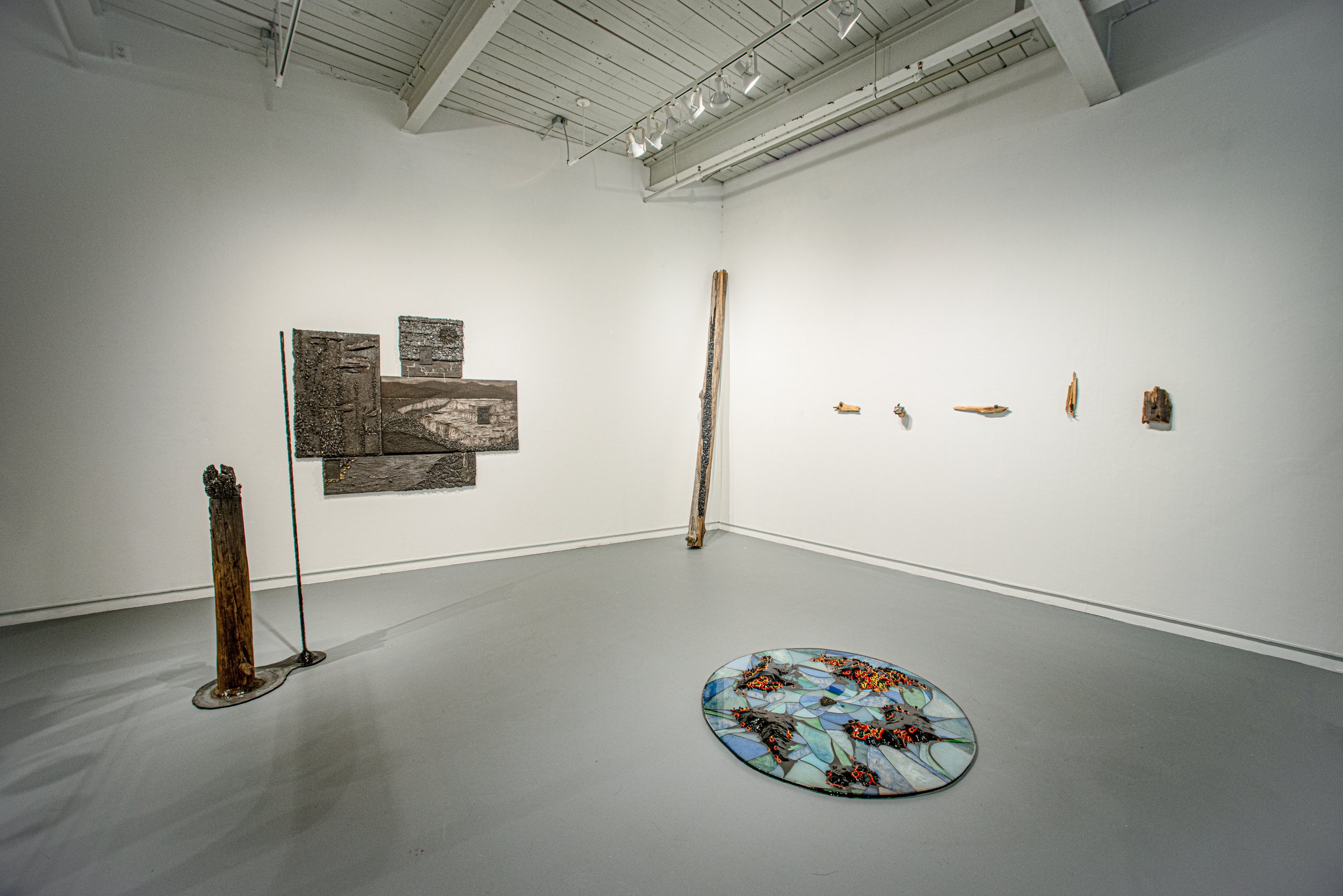
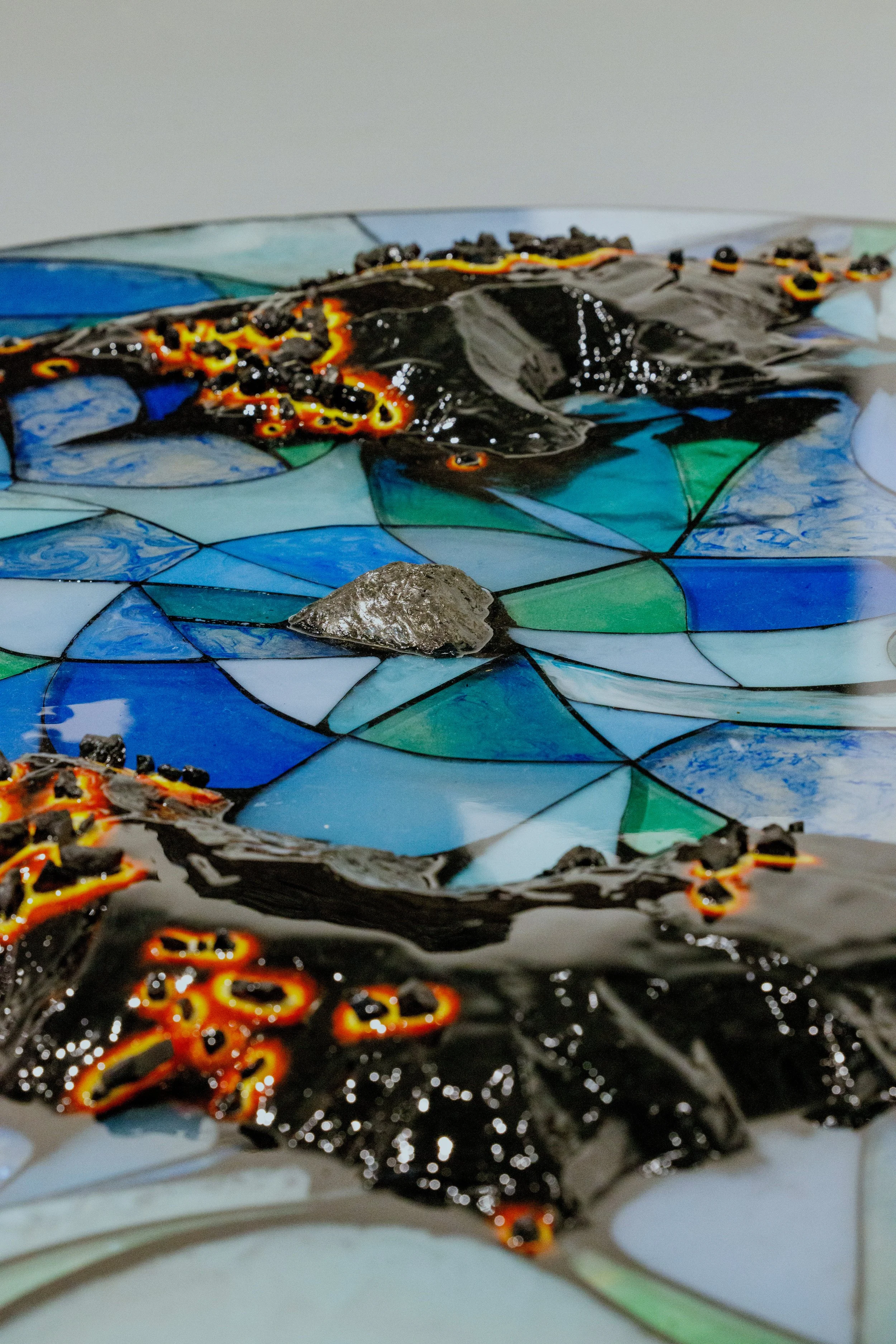
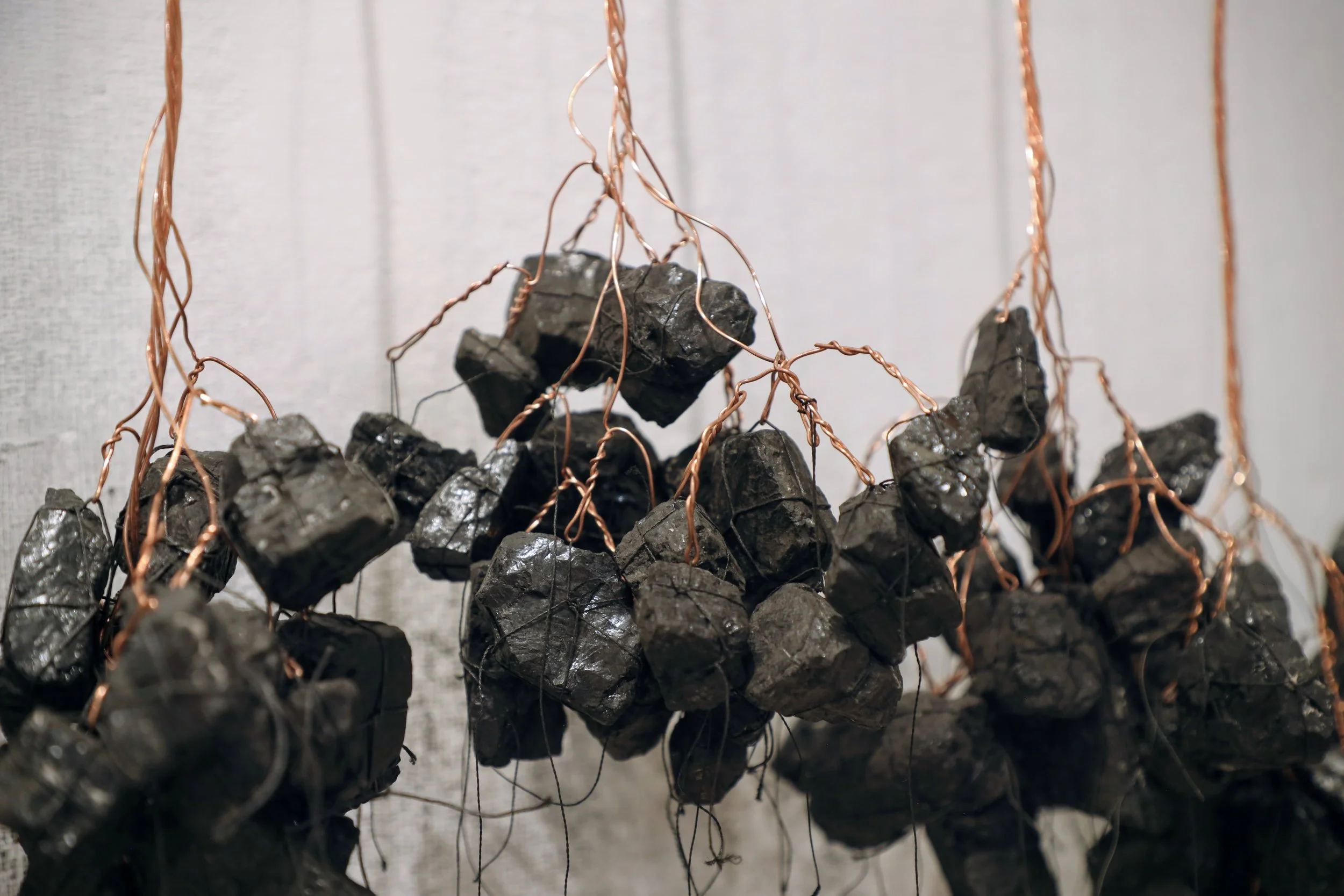
The legacy extraction industry has created for coal is that of its final, conventional, and profitable use. This body of work is focused on pushing past this representation and reframing how coal is remembered. I want to give life to what is perceived as an inanimate commodity and come closer to the reality of coal. By expanding views on coal to its role in carbon and toxin capture, not just release, how its deposits touch land everywhere, and as a result, the artistic and magical role it has played in various cultures, we can redefine coal beyond the power sector, and see it not as a commodity waiting for our use, but a protector of the world. This exploration, in tandem with showing the consequences of human hubris against it, rejects a single narrative of what coal is or can be. Instead of only displaying the gaping wound that was left by industry, these pieces strive to bring us closer to healing our relationship with that material and, beyond that, our relationship with the Earth.

Coal
Power Plants
In my journey with coal, I was led from its mining in coal country to where it ended up, 92% of it being burned for power. My most recent work creates a picture of coal, its current aesthetic constant in our built environment, its peak and downfall in the energy production industry, and the limited amount left to mine. To do this, I took different approaches, looking at my memories of living by a coal power plant, then on reclaimed coal mining land, as well as data sets of electricity generation from coal power plants, and estimated coal reserves.


Coal and
Appalachia
I am inspired by memories of growing up on reclaimed mining land in West Virginia. This experience, living with the repercussions of an unaccountable billion-dollar industry while witnessing it continue to tear apart the land, became a starting point for these pieces. They were further informed by data such as maps of West Virginia's underground and surface mine locations, hydrological maps, comprehensive studies on waterways and public water systems, their monitoring sites, and the types of pollutants found.